Advertised vs. Actual: How Lenders Determine the Rate You Really Get on a Personal Loan
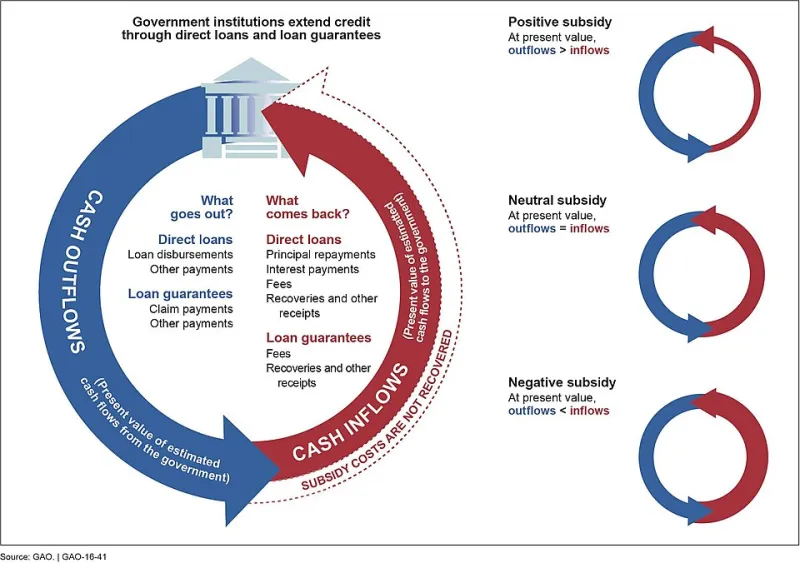
Photo: U.S. Government Accountability Office, Public domain, via Wikimedia Commons
When a lender promotes a personal loan with rates "starting from 6.99%," it is easy to assume that figure is within reach. For most borrowers, however, that number belongs to a narrow band of applicants with near-perfect financial profiles. Everyone else lands somewhere further up the range — sometimes all the way to 35.99%. The gap between what is advertised and what a borrower actually receives is one of the most consequential, and least discussed, aspects of the personal loan market.
At AmeriLoanSearch, we believe that transparency is the foundation of sound borrowing decisions. This article examines why that gap exists, how lenders assign rates, and what concrete steps you can take to close the distance between the headline figure and your actual offer.
Why Lenders Advertise a Range Rather Than a Single Rate
Federal lending regulations require lenders to disclose their APR — the Annual Percentage Rate — which bundles the interest rate and most mandatory fees into a single annualized figure. What regulations do not require is that lenders tell you upfront which rate you will receive or precisely how that determination is made.
The wide range exists because lenders serve an equally wide spectrum of borrowers. A lender extending credit to applicants with FICO scores anywhere from 580 to 800 must price risk accordingly. A borrower with a 780 score, stable employment, and low debt represents minimal default risk and earns a rate near the floor. A borrower with a 610 score, irregular income, and existing debt balances is statistically more likely to miss payments — and is priced to reflect that reality.
The advertised low rate, in regulatory terms, must be offered to a "substantial" portion of applicants, though that threshold is interpreted loosely. Some lenders define it as roughly 20 percent of approved borrowers. That means as many as four out of five people who receive an offer could be paying a considerably higher rate than the one featured in the advertisement.
The Factors That Determine Where You Fall on the Range
Lenders use proprietary scoring algorithms to assign rates, but the underlying inputs are relatively consistent across the industry. Understanding each one helps you anticipate where you might land before you ever submit an application.
Credit Score and Credit History Your FICO score remains the single most influential variable. Most lenders operate tiered pricing models — for example, one tier for scores above 750, another for 700 to 749, another for 650 to 699, and so on. Moving from one tier to the next can shift your rate by two to five percentage points, which translates to hundreds or even thousands of dollars over a three-to-five-year loan term.
Beyond the score itself, lenders examine the composition of your credit history: the age of your oldest account, the mix of credit types, any recent delinquencies, and the number of hard inquiries on your file within the past twelve months.
Debt-to-Income Ratio Lenders calculate how much of your gross monthly income is already committed to existing debt payments. A debt-to-income (DTI) ratio below 36 percent is generally viewed favorably. As that ratio climbs toward 43 percent and beyond, lenders perceive greater repayment risk and adjust the rate upward.
Loan Amount and Loan Term Counterintuitively, borrowing more or choosing a longer repayment term does not always result in a lower rate. Many lenders assign different rate tiers based on loan size, with mid-range amounts — often between $10,000 and $25,000 — receiving more competitive pricing than very small or very large requests. Longer terms also carry higher rates on some platforms because the extended repayment window increases the lender's exposure to economic uncertainty.
Employment Type and Income Stability Salaried W-2 employees typically receive more favorable treatment than self-employed borrowers or those with variable income, even when total annual earnings are comparable. Lenders value predictability, and a consistent monthly paycheck is easier to underwrite than a fluctuating 1099 income stream.
A Real-World Illustration of the Gap
Consider two borrowers, each requesting a $15,000 personal loan over 48 months from the same lender advertising rates from 7.49% to 34.99%.
Borrower A has a 775 FICO score, a DTI of 28 percent, and seven years of credit history with no delinquencies. She receives an offer at 9.25% APR. Her monthly payment is approximately $374, and she pays roughly $2,952 in total interest.
Borrower B has a 648 FICO score, a DTI of 41 percent, and a two-year-old collection account. He receives an offer at 24.99% APR. His monthly payment climbs to approximately $487, and total interest paid exceeds $8,376 — nearly three times what Borrower A will pay for the identical loan amount and term.
Both borrowers saw the same advertisement. Only one of them came close to the rate that attracted them to the lender in the first place.
How to Narrow the Gap Before You Accept an Offer
While lenders rarely negotiate rates the way a car dealership might, there are legitimate strategies that can improve your position.
Use Pre-Qualification Across Multiple Lenders Pre-qualification uses a soft credit pull that does not affect your score. By submitting pre-qualification requests through a comparison platform — rather than applying directly to a single lender — you generate multiple rate estimates simultaneously. This gives you a realistic picture of where your actual rate is likely to land before a hard inquiry appears on your report.
Reduce Your DTI Before Applying Paying down a revolving balance or eliminating a small installment loan before submitting your application can meaningfully lower your DTI ratio. Even modest improvements — dropping from 42 percent to 37 percent — may move you into a more favorable pricing tier.
Consider a Shorter Loan Term If your monthly budget allows, selecting a 36-month term over a 60-month term frequently results in a lower APR. While the monthly payment rises, the total interest paid decreases substantially.
Leverage Competing Offers Some lenders, particularly online fintech lenders and credit unions, will consider matching or beating a competing offer if you provide documentation. This tactic is not universally effective, but it costs nothing to attempt and occasionally yields a meaningful reduction.
Address Credit Report Errors First Request your free credit reports from AnnualCreditReport.com and review them for inaccuracies before applying. Disputed and corrected errors can produce rapid score improvements that shift you into a better pricing tier.
Reading the Fine Print Before You Sign
Once you receive an actual loan offer — not a pre-qualification estimate, but a formal offer with a hard inquiry attached — review every line of the disclosure document. Confirm that the APR quoted matches your expectations from the pre-qualification stage. Identify any origination fees, which are sometimes embedded in the APR but can still affect how much money you actually receive at funding. Verify the total repayment amount, not just the monthly payment figure.
The monthly payment number is the figure lenders tend to emphasize because it is the smallest and most digestible. The total interest paid over the life of the loan is the number that matters most for your financial health.
The Bottom Line
The spread between an advertised APR and the rate a specific borrower receives is not accidental — it is the product of deliberate risk-based pricing models applied to an enormous range of financial profiles. Recognizing this reality, rather than being caught off guard by it, puts you in a fundamentally stronger position when you enter the loan market.
Comparing multiple lenders through a structured search process, understanding the variables that influence your tier assignment, and taking targeted steps to strengthen your application are all within your control. The advertised rate may not be your rate — but with the right preparation, your actual rate can still be one you are comfortable accepting.